
How to Get Court Records
There is no single countywide database for Claiborne County court records. Each court keeps its own. Circuit case papers sit with the Circuit Clerk. So does the Circuit MEC record. Chancery matters belong to the Chancery Clerk and that court's MEC docket. A Justice Court citation starts with the Justice Court Clerk, and a Port Gibson municipal citation follows the municipal route. The local Circuit docket page can show a near-term setting, but treat it as a courtesy calendar rather than a full file or the controlling order.
For eligible Circuit and Chancery material, remote access runs through Public Access to Mississippi Electronic Courts, known as PAMEC. If a document is not visible there, call the proper clerk. Stop by the office. You can also mail a focused request after confirming the preferred mailing method. The county offers no local court-record request form. The Mississippi Public Records Act supplies statewide context. Judicial records answer first to court rules, court orders, and each clerk's access process.
- Identify the court, case number, parties, approximate year, and the item needed. A docket sheet, judgment, order, transcript, and land instrument are different requests.
- For an eligible Circuit or Chancery case, check MEC/PAMEC after registration. For a current setting, use the official Circuit docket page as a lead and confirm it with the court.
- Send the appropriate clerk a narrow request stating the court, case number, document or date range, and whether a plain or certified copy is needed.
- Ask the clerk whether a search, copy, certification, or delivery charge applies before sending payment. Local fee schedules and payment methods were not published.
- Keep the response and any receipt. If access is limited, ask what public index information or written reason can be released.
Note: Cases can move from Justice Court up to Circuit Court. Confirm the court of origin before you pay for a records search.
Claiborne County Clerk Record Routes
Getting the right clerk is half of any Claiborne County record search. The Circuit Clerk files civil lawsuits. It also files indictments, motions, judgments, and other Circuit papers. County routing material sends civil litigation and criminal-history inquiries to that office, though a clerk-held court file is not a full law-enforcement history. The Chancery Clerk takes equity, domestic, probate, guardianship, and property matters. That office also records deeds, mortgages, liens, lis pendens, and military discharges. Some requests are really land-record requests. They are not Circuit case requests.
Claiborne County Circuit Clerk
Gale Compton
P.O. Box 549
Port Gibson, MS 39150
601-437-5841
Claiborne County Chancery Clerk
Gloria Dotson
P.O. Box 449
Port Gibson, MS 39150
601-437-4992
The Chancery page publishes the email gloriadotson@ccmsgov.us, but verify it on the current office page before sending anything personal. Addresses are a real problem here. Official county materials give Market Street numbers that conflict between 401 and 410. MEC and the county guide use 410. The county Courts page lists 401 for both the Circuit and Chancery offices. Call ahead rather than trusting either street number. The state directory supplies the mailing addresses and phone numbers above.
Types of Court Records
Different courts keep different records because their jurisdiction differs. A Circuit case file can hold a docket sheet, an indictment or civil pleadings, motions, signed orders, a judgment, and sentencing materials. Chancery files may include petitions, decrees, probate filings, guardianship papers, and property instruments. A calendar helps you find a hearing date. It is not the case file behind it.
- Docket sheets or case summaries that list filings, notices, settings, and orders in time order.
- Filed complaints, petitions, answers, motions, responses, and proposed orders.
- Signed orders, judgments, decrees, dismissals, plea materials, and sentencing orders.
- Justice Court citation or preliminary-case material, and Port Gibson municipal citation information.
- Chancery land instruments such as deeds, mortgages, liens, lis pendens, and related records.
- Transcripts, which are court-reporter records and not simply a printout of the docket.
Older Claiborne County material can take a different route. The Mississippi Department of Archives and History finding aid points to early Claiborne juror certifications, justice-of-the-peace affidavits, and tax indexes. Those are archival leads, not MEC searches, but they count when research reaches past the electronic record era.
Claiborne County Land Record Split
A Claiborne County property question can pull on two different record types at once. A Chancery case file may hold a petition, an order, a decree, or a litigation docket. The Chancery Clerk's recording function keeps deeds, mortgages, construction and condominium liens, federal tax liens, and lis pendens. A recorded deed is not a court docket entry. It does not become one because the property is tied up in a lawsuit.
Tell the Chancery Clerk exactly what you want. It might be a court case, a land-record instrument, a judgment, or a certified copy. The county's Chancery Clerk page routes divorce, estates, land, and delinquent-tax matters there. The office has a separate recorder role. Knowing that can spare you a search of the wrong record family.
Note: A property address helps as context. But the clerk may still need the case number or recording details to find the record.
Claiborne County Electronic Court Records
Claiborne County Circuit MEC went live in 2019. The Chancery MEC record, by contrast, shows a 2018 start. The two systems are separate entry points. Both use the PAMEC public-access framework. PAMEC runs on accounts, not a free anonymous county name search. Narrowing by court, year, and case number avoids overly broad results. It also makes any clerk follow-up more precise.
The Mississippi Ethics Commission's Public Records Act information lays out the state framework behind public-record access. That framework carries exceptions and procedures of its own. It does not replace the judiciary's rules for a specific Claiborne County court record.
When a document is missing from the electronic file, stop searching. Ask a person. The Claiborne County clerk or court administrator can tell you what exists. Broad, vague searches rarely work better. Protected entries in the court docket may display only limited details. The calendar is never the last word on what happened. Trust the signed order or the later docket entry instead.
Note: PAMEC opens eligible electronic files. But it does not put every Claiborne County court record within remote reach.
What a Court Record Contains
Think of a Claiborne County court record as a bundle of related pieces. It is not one status stamp. The docket sheet is the chronological index of the case. Each line may point to a pleading, a notice, an order, a setting, or a disposition. The filed document behind that line supplies the context. A setting is only scheduled activity. It does not prove a hearing took place or reveal the result. The same caution applies to a MEC flag like closed, sealed, or pending. Read the underlying docket entry or order before drawing any conclusion.
| Case number | The court's search key. Circuit civil samples use year-sequence patterns, while criminal samples show CR2025-04-style patterns. |
|---|---|
| Docket sheet | A chronological list of filings, notices, settings, orders, and other case events. |
| Pleadings | Documents such as complaints, petitions, answers, motions, and responses that define what the court must decide. |
| Orders and judgments | Signed rulings, decrees, dismissals, sentencing orders, or final judgments that control the case result. |
| Attachments and exhibits | Filed supporting material that can be redacted, withheld, or separately restricted even where the docket line is public. |
To pull the full history and the rulings, you usually need a case number first. The Claiborne County case search route helps you map the court and the case trail. That makes any later copy request far easier.
Claiborne County Transcript Requests
A transcript is the court reporter's word-for-word record of a proceeding. It is not a docket sheet. It is also not a certified clerk copy. Twenty-Third Circuit staff information names an official court reporter. But the local sources publish no transcript fee form or general request process for Claiborne County. So ask the clerk or court staff directly. Get the hearing date and case number. Learn who holds the transcript, and ask whether the reporter needs a written request.
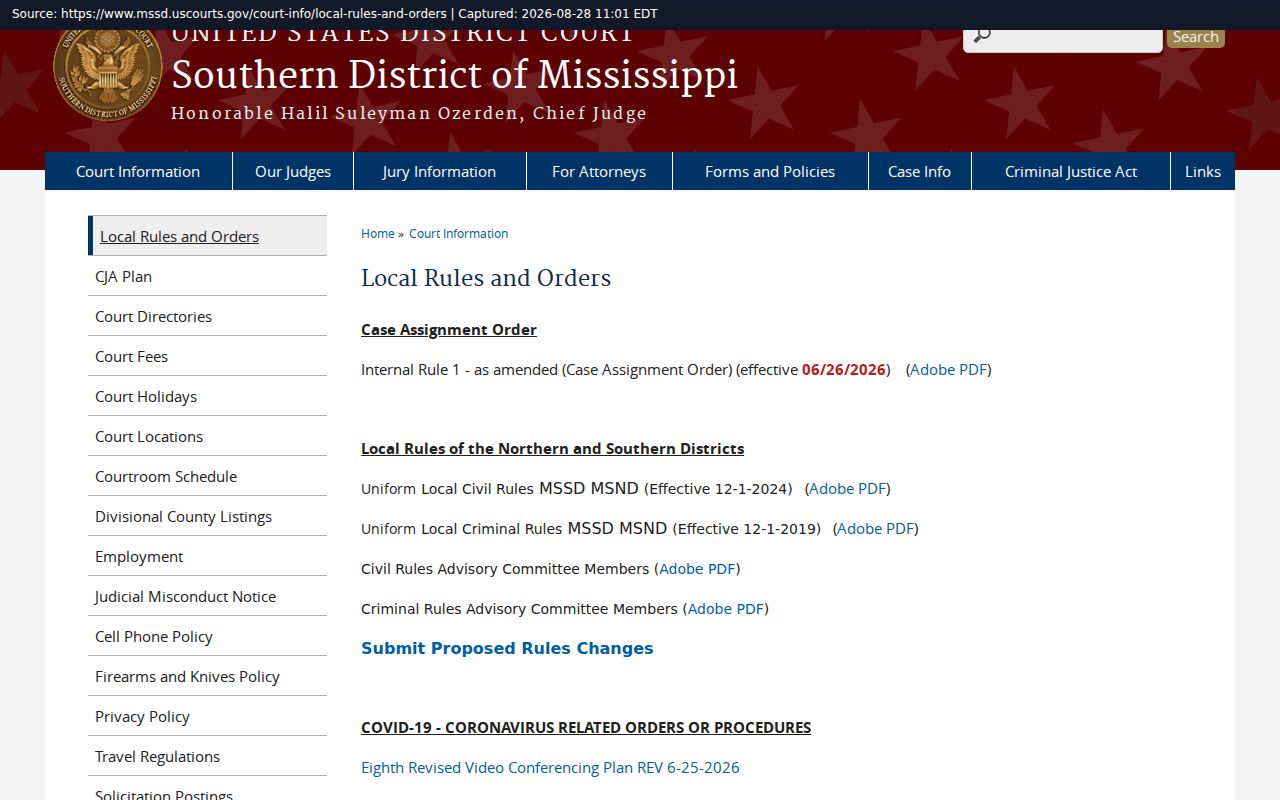
Federal record procedures are a different system. The Southern District's local rules and orders page shows that contrast. Federal rules and federal electronic access never convert a county-clerk request into a federal one.
Whichever court system you use, name the proceeding and its date. That one detail lets staff tell a transcript request apart from a request for an order, a docket sheet, or a calendar.
Certified Copies and Fees
A plain copy just reproduces the record. A certified copy carries the clerk's certification. That is the product to request when an original-record certification is required. State fee statutes give a starting point. But Claiborne County publishes no current schedule of copy, certification, search, payment, or turnaround fees. Confirm the amount and payment method with the clerk before you send anything.
| Item | Amount or authority | What it covers |
|---|---|---|
| PAMEC annual registration | $10 under published PAMEC terms | Remote public-access account registration, not a clerk-certified copy. |
| PAMEC search-result page | $0.20 per page under published terms | Electronic access; terms also describe a one-page no-match charge. |
| Chancery copies and certification | Miss. Code §25-7-9 | Statutory Chancery fee reference. Ask the clerk for the current local charge and method. |
| Circuit copies and certification | Miss. Code §25-7-13 | Circuit Clerk fee reference. No exact local fee is stated here because none was published. |
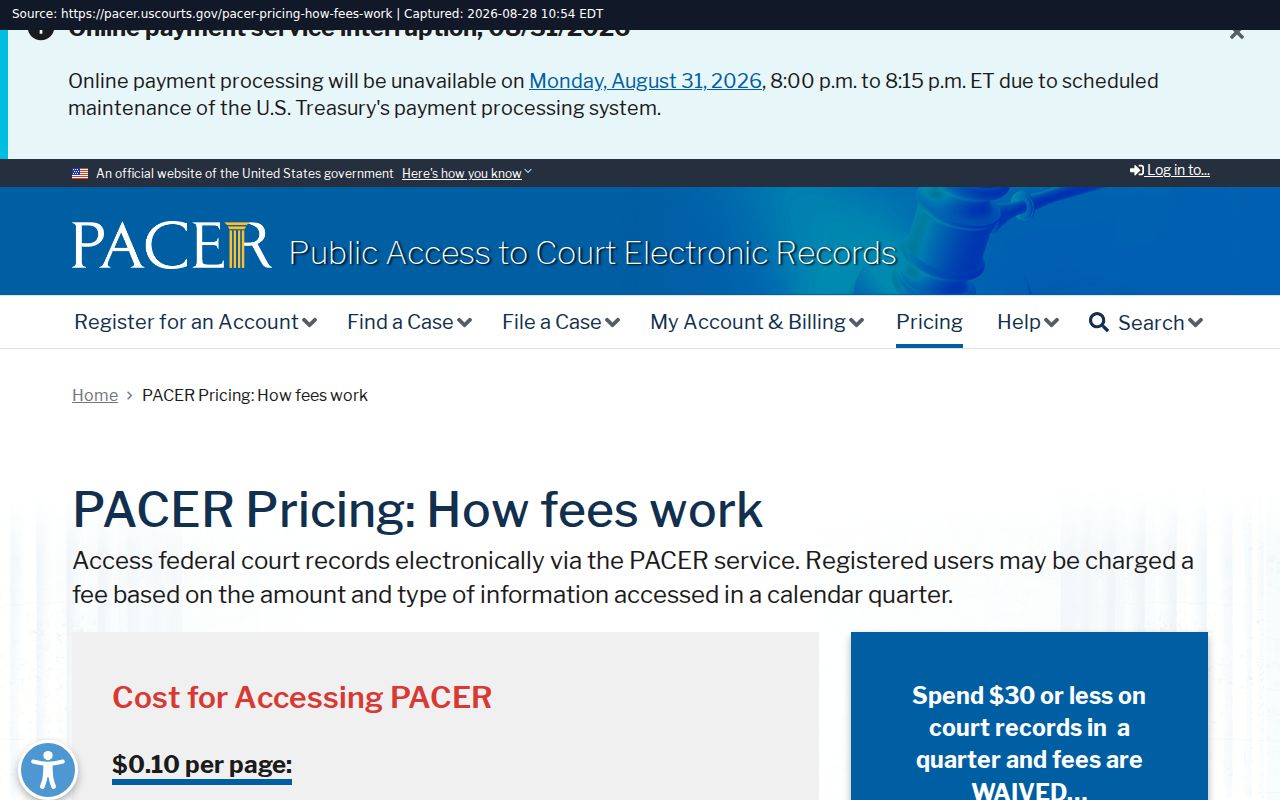
The PACER pricing information covers federal electronic files only. PACER's fee schedule stands apart from both PAMEC electronic charges and any Claiborne County clerk-certified paper copy.
Say up front whether you want a plain copy or a certified one. It saves the clerk work. Asking for a specific signed order is usually clearer, too, than requesting an undefined entire file.
Claiborne County Federal Record Route
A federal case tied to a Claiborne County party, property, or event stays federal. It never turns into a Circuit or Chancery file. Claiborne sits in the Southern District of Mississippi's Western Division at Natchez. Federal dockets run through PACER and the district's CM/ECF system. Begin with a party name or a federal case number. RECAP sometimes offers a contributed public copy. But PACER remains the record-access system to confirm against. The Southern District county-divisions listing shows the federal assignment for Claiborne County.
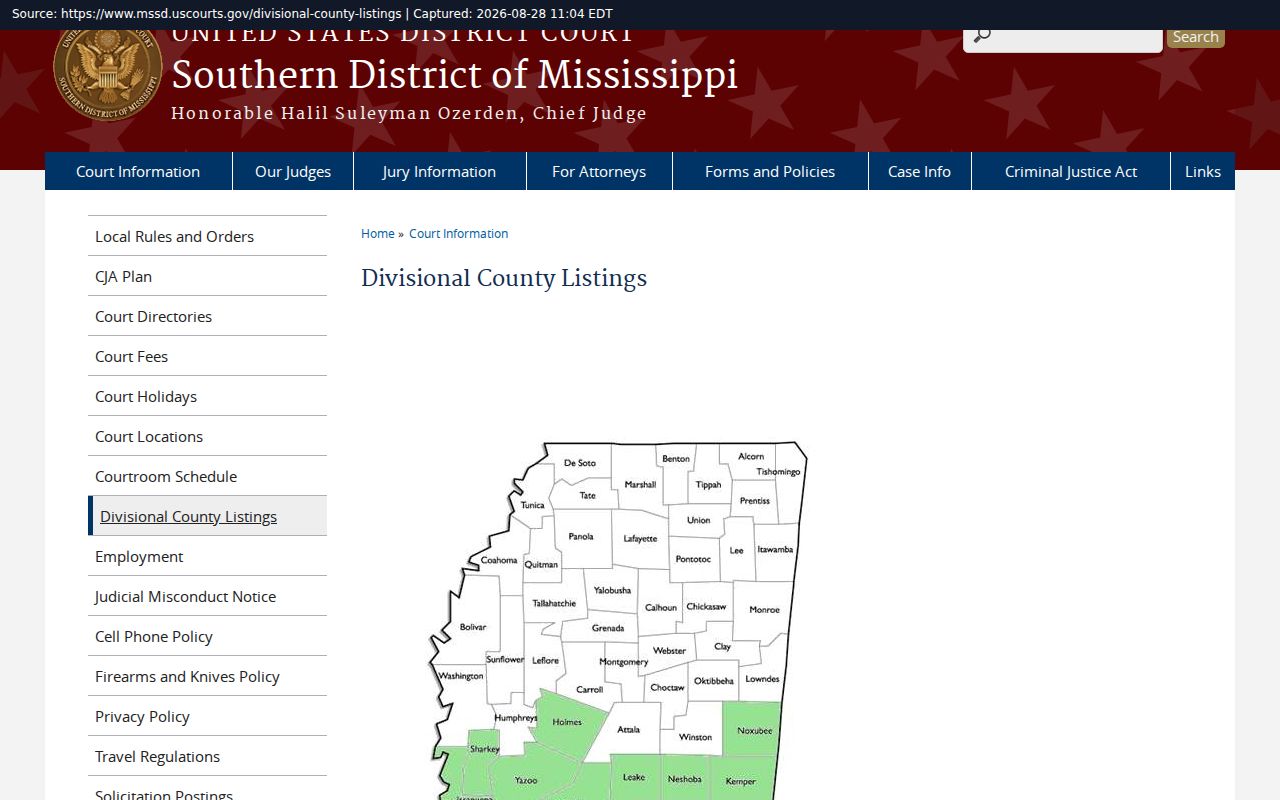
That division listing keeps a county-clerk search from being mistaken for a federal case search. It offers no countywide federal case index, though. The Natchez federal courthouse information gives the Western Division location, and the Southern District home page is the court's entry point for federal services.
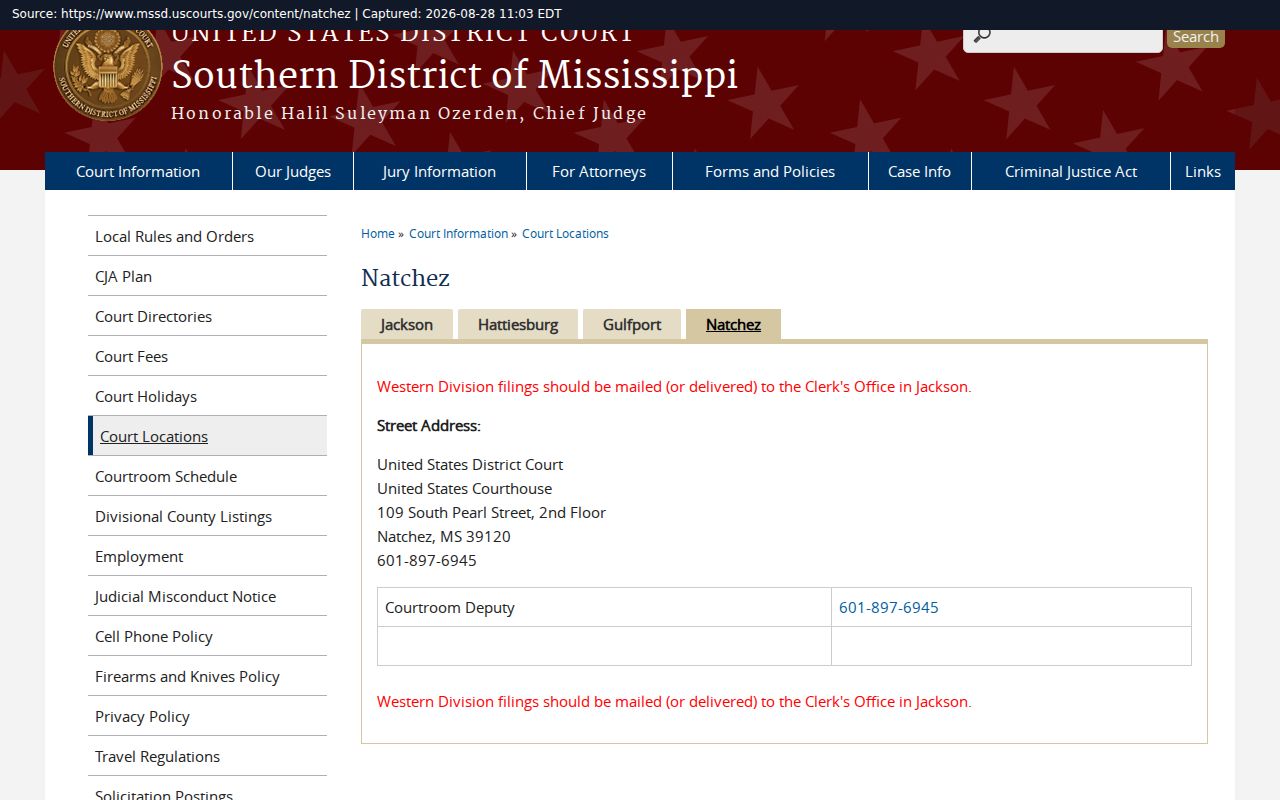
The Natchez courthouse belongs to the federal route. It is not where you obtain an ordinary Claiborne County clerk record. The Southern District's official court home page is also displayed with this section. Use it for federal court navigation once a federal case is identified, not for state or local citation records.
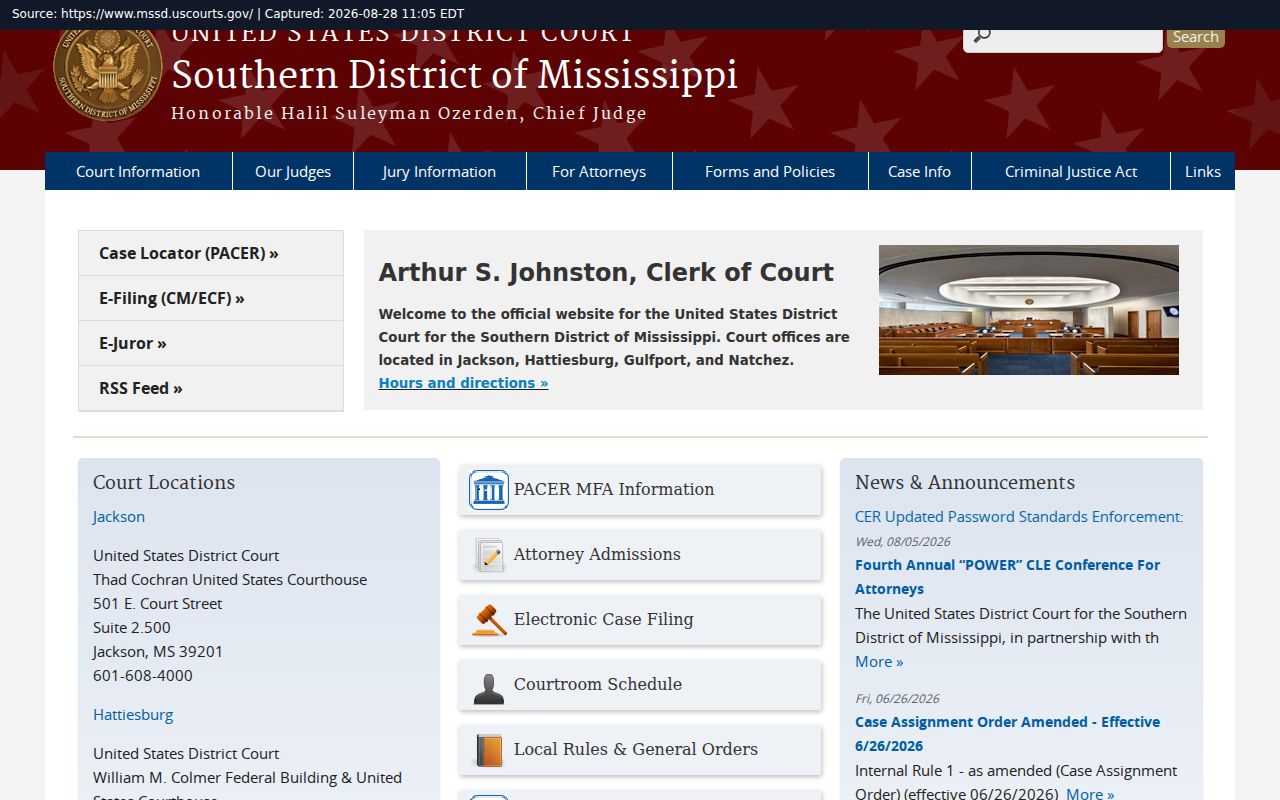
Federal access runs in its own lane. A county court record request still belongs with the Circuit, Chancery, Justice, or municipal office that holds the file.
Public Access and Sealed Records
Many Claiborne County docket entries and court records are public, within court rules and stated exceptions. Public access does not open every attachment. Youth Court records are confidential. Family, adoption, guardianship, conservatorship, protected-person, sealed, expunged, and protected-identifier material can carry narrower access still. A document can be missing for a reason. Restricted access may explain it rather than the absence of a case.
Key Rules:
Mississippi Public Records Act, Title 25, Chapter 61 - State public-records context, while court access remains subject to judiciary rules and court orders.
MEC privacy policy - The judiciary is a separate branch, and remote records are governed by court rules and local law.
Miss. Code §43-21-251 - Youth Court records have statutory confidentiality limits.
If a docket search says sealed, reports no permission, or simply lacks the expected document, ask the clerk what public index information can be released and whether an order or statute controls access. A public listing alone settles nothing. Never read guilt, liability, custody, or a final outcome into it.